


- Details
- Written by: Rod Boyle
- Category: Books
- Hits: 333
To summarize, a young man first loses his cat, then his wife, and things take a few turns from there...
This was a thick read at some 600 pages, interesting, and I was right, I had read it before, the scenes in the well were all I recalled, and those poorly, so it was if I were reading it fresh again. An interesting pool of characters, the twining of plots, surreal, Murakami is a masterful writer.
- Details
- Written by: Rod Boyle
- Category: Books
- Hits: 382
This was a bit of a "Ho-Hum", Campbell's theories of Mono-myth and cross-cultural contamination; the great spiritual truths of our age, etc, etc. While he did a formidable amount of scholarship on these things and I no doubt have been brought to it time and time again via other sources, which made this - well, the ideas were not "fresh" to me shall we say.
And while clearly I'm not in a position to anyways criticize or critique him this one will be heading back to the bookstore soon.
If you want to read a great book on Fairy Tales and the symbolism contained therein, try Bruno Bettelheim's "The Uses of Enchantment".
- Details
- Written by: Rod Boyle
- Category: Books
- Hits: 341
Now, I've already given a fair review of the first 100 pages, and the rest didn't disappoint. All 800+ pages of it.
My Takeaways:
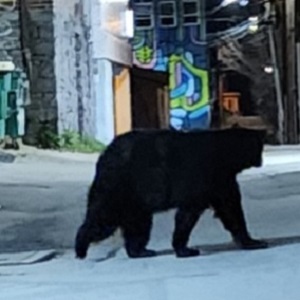
- The fate of the tame Polar Bear (got too big, got too drunk, and ended by getting shot)
- Notes from the natives (Esquimaux) on how to walk past Polar Bears unmolested (and the idea that Man, time out of mind, has been lord and master and these creatures are not regarding us as prey, rather they're looking to protect themselves/their dinner or their young.)
- He reports upon the fauna (and a lesser extent the flora) with the eye of a naturalist, describing their environments, the habits, migrations, diets, etc of each.
- His meeting with both Alexander McKenzie & John Franklin (That Franklin!!)
- Tyrell's follow up his footsteps in the late 19th/early 20th century - taking pictures of himself in the ruins of old Forts and Fur Houses (and 1 could plan a fine vacation in his footsteps, not forgetting to bring along one's metal detector...)
- His extensive notes upon the Indian Nations and tribes that he meets, including his notes upon their myths, beliefs, in their universal belief in the immortality of the soul (and reluctance to discuss with White Men), the treatment of the Indians by the Hudson's Bay/North West Company, and their treatment of them (by and large overwhelmingly hospitable)
- Inexplicable events, a meteor that crashes near to him but leaves no evidence, will-o-the-wisps or ball lightening, meteoric activity that he believes predicts a gale, the sound of the Northern Lights....
- the Rations, per man, accounted at 5 pounds of meat or 8 pounds of fish, per day (!!!!)
- Describing a tribe that has become self-deluded with a new religious fad, the elders, men of wisdom and chiefs and warriors generally let it pass as a fashionable idiocy, and it does within a couple of years, the sexual customs of the various tribes, only some of which he approves, their morals, manners, customs, agricultural, the hunting tribes, the myths he tells in their own voice, of the Whetigo or Wendigo, and real examples he was familiar with, and how one who insisted he was becoming was executed by his own father, the very real fear of having to kill your relatives to survive a starving winter, become it's own mental illness (how are illnesses are defined by the cultures we come from)
- The torments of mosquitos, black flies, horse flies, no-see-ums, etc; and how he regards lands we've already turned to pasture and the plough as to be forever uninhabitable
- The former abundance of Sturgeon, in every river...
- 1798 the migrations of the eastern Indians, the Iroquois & Metis, to hunt beaver in other territories not denuded of them. These were called "Free Hunters" that having extirpated the game in the East find that trespassing on other tribal lands to hunt and trade and cheating the resident tribes of their territorial bounty almost invariably resulted in death.
- 1910 - Tyrell’s inventory of Wildlife, all described as “Formerly common”, everything even by then had been lost, the bison, white tailed deer, bear, etc. etc. And note as well, that the mountains even here once held antelope and Bison (and Thompson has abundant accounts of hunting them in the interior, all now extinct).
- And the size of trees, nonesuch existing today.
- 1781 - On the heels of smallpox, 3/5 of the Indians were killed or succumbed to it, entire tents filled with the dead and dying, being predated by dogs and wolves, which coincided with the demise of game, Bison, Deer, Moose, fowl, the Natives explaining as they were placed there for man, and as man was no longer they vanished in proportion - an interesting idea - this all between the Bow and the Highwood rivers, and a first hand account of a war party that came upon a camp where the Bow joins the Saskatchewan (I've been there, camping), strangely deserted, horses grazing, dogs running between tents, no signs of life, going to investigate they discover the tents filled with the stench of the dead and dying; and this was how they contracted the smallpox...
- Relaying accounts from an elder he stayed with one winter, accounts of war, tradition, etc, going all the way back to 1730…his reaction to seeing the first horse, “Big Dogs” they called them, another animal in the service of man.
- 1 Chief's speech following the Smallpox on how it has humbled them and changed the nature of war: "We were fond of War, even our Women flattered us to war, and nothing was thought of but scalps for singing and dancing. Now think of what has happened to us all, by destroying each other and doing the work of the bad spirit ; the Great Spirit became angry with our making the ground red with blood : he called to the Bad Spirit to punish and destroy us, but in doing so not to let one spot of the ground, to be red with blood, and the Bad Spirit did it as we all know. Now we must revenge the death of our people and make the Snake Indians feel the effects of our guns, and other weapons ; but the young women must all be saved, and if any has a babe at the breast it must not be taken from her, nor hurt ; all the Boys and Lads that have no weapons must not be killed, but brought to our camps, and be adopted amongst us, to be our people, and make us more numerous and stronger than we are. Thus the Great Spirit will see that when we make war we kill only those who are dangerous to us, and make no more ground red with blood than we can help, and the Bad Spirit will have no more power on us."
- He devotes chapters to each tribe - for example the Peegans, Blackfeet, & Blood Indians, united by Language and part of the Sioux confederacy,
- Wild horses roaming the wilderness descended from the ones brought by the Spanish
- When south of the Canadian border relates an Indian account of a skirmish with a party of Spaniards & a fair description of the silver bars they threw from their bags. This lends credit to other rumours - of the Spanish Mound, and the Spanish Workings around Pitt Lake & Meadows
- Ancestral memories of the Mammoth, near the headwaters of the Athabasca, the natives claim it’s existence but none have seen one, although Thompson notes some inexplicable giant tracks that no-one is inclined to follow (memories, of pre-glaciation? Or of something frozen in a glacier and released thawing to marvelling eyes?)
- Traders trafficking in items of war, then being threatened - Peegan indians would not allow them to cross the mountains to similarly trade with and arm the Kootenai, this is the entire history of British Colonization, From Africa to North America...
- Trade goods, Hudson’s Bay Axe’s & iron arrowheads & spearpoints (branded, no less), musket balls, things you wouldn't think to find but all were traded and used in these very environs. Where's my metal detector?
- His somewhat droll observation/favourably observation, made repeatedly about tribes he likes: “Clean as people can be without soap”...
- And, curiously, in the entire volume he never once mentions his wife & children.
Anyways, I could go on, but if you're interested you can read him online here: https://archive.org/details/davidthompsonsna12thom/mode/2up
- Details
- Written by: Rod Boyle
- Category: Books
- Hits: 299
David Thompson's Narrative of His Explorations in Western America Part 1 & 2 - David Thompson, Joseph Burr Tyrell
So clearly I didn't go with the "Clear up the shelf/Tidy the Apartment" motif and I dived straight into Thompson's Narrative.
Or, to be more precise, dived into the introduction, and then the itinerary, and now, some 100 or so pages in I'm into the narrative.
Now I love this, it's a keeper, for in it much will be found that will benefit our intrepid prospector, an abundance of clues to be followed up upon, and already, recognizing all the historical routes he travelled and pioneered, the distances he covered, the tribes he met, his own reflections on such (he was 14 when he arrived in Hudson's Bay apprenticed to the Company, "sold" for want of better world from his orphanage in Westminster, and his descriptions of the wildlife, the abundant forts, factory's, houses and camps the fur traders stayed in, along the Red Deer, all environs Alberta and BC as far as the Arrow Lakes and Revelstoke, well, all these places now lost to the woods and can be reasonably pinpointed on a map (and gone to with a metal detector), there will be treasures to be found for sure. I need to make sure I have wheels and next summer free...
And recognizing, of course, the creeks and rivers that he passed over that later proved the site of major gold rushes, a shame he wasn't more of a geologist or taught to dip the pan, but - I'm early into it, there will be clues.
First person history, by North America's greatest geographer and far, far earlier than Lewis and Clark (and far better travelled).
My edition, a limited and numbered one from a limited run of 500, so probably hard to find your own, but you can read it all here online: https://archive.org/details/davidthompsonsna12thom/page/n9/mode/2up
- Details
- Written by: Rod Boyle
- Category: Books
- Hits: 306
This was a curious read - and, without giving away too much...
A 16th Century French Peasant takes leave of his wife, family and estate. When he returns 8 years later at first he is welcomed with open arms, his wife especially. But soon there comes to grow on her the suspicion that he is not the same person that left her, and the kindness and maturity she notes cause her - against the will of the Family and Estate - to repudiate him, and through the courts she seeks her retribution...
Now, based upon a true story and to go further would spoil the plot, but the author Janet Lewis introduces more than a few ideas regarding identity and truth...
A slim book, well researched and worth the read.