














- Details
- Written by: Rod Boyle
- Category: Ideas & Questions
- Hits: 1614
I've added this to my morning regime. (**REGIME** LOL THAT'S AN IN-JOKE FOR COFFEE, INTERNET AND CIGARETTES) For some reason I've taken a fancy to chilling in an ice bath for 10 minutes. I don't think I've ever done even a minute in the plunge pool at Ainsworth, although the daughter did 6 (I timed, told her her brother did 5 and so she had to beat him) - and the plunge pool, it's around 4-10 degrees Celsius, well above what Wim Hof is doing, tropical by comparison. His method? Well - it's - well, breathing - when you smoke - breathing can be a challenge. Breathing deep and holding your breath. And so by focusing on breathing I'm hoping to reduce the urge to smoke. Or - at the very least - get some oxygen to some seriously deprived cells. There can be no harm in this. The first time I tried it I held my breath for 2 minutes afterwards. Not bad. Although I could feel it in my chest the next day.
So, this on the list of morning things, before meditation (and it seems to cut into that time, there's an overlap for sure), and I'll let you know the results in a week or two...
Meanwhile, the link: https://www.youtube.com/watch?v=nzCaZQqAs9I
- Details
- Written by: Rod Boyle
- Category: Ideas & Questions
- Hits: 1753
This is the idea that many forms of knowledge cannot be acquired without experience. There are places where words, descriptions, actions fail to capture the entirety of experience - where the mind cannot go without having first been there in the flesh.
Imagine taking a primitive tribe member, or somebody from the middle ages to Tokyo and you have the idea, his or her language won't contain the words or the ideas necessary to describe their experience.
The most well known example of initiation that I can think of is the Garden of Good and Evil, where Eve begs Adam to taste of the fruit of the knowledge of good and evil. This is initiation in the purest form - once tasted there can be no going back, and one has entered into a whole new world of opportunity and experience.
Initiation, here it should be noted, is often - almost always - described symbolically or metaphorically. Remember we are here discussing experiential knowledge that cannot be acquired through reading or other means.
Now - Initiations fall into a broad range of categories, which I will summarize here - most of them merely ape other, greater initiations or indoctrinations, or are done more for the sake of the audience than they are for the participant.
- In this class we have the Seven Sacraments of the Catholic Church - Baptism, Confirmation, Eucharist, Confession, Anointing of the Sick, Holy Matrimony and Holy Orders. These - for the most part, are done for the social benefit, the Church has too long obscured the real meanings behind the Sacraments and so they remain veiled even for the recipient.
- We also have the Initiations into public office, the Keys to the City, the Swearing in of the President, Pageantry and seals of office, other processes of officialdom. It is possible, although unlikely, that with these initiations there comes a deeper knowledge or understanding of the privileges and responsibilities of office, but it would appear from the general behaviors of the initiated that - No, this is purely formality and ceremony.
- And then there is the initiations into sports teams and sophomore fraternities, where the initiation creates generally through the shared bonds of shame acceptance into the group.
The above forms of initiation cannot be considered, in any real or meaningful way, initiations. They have fallen into the pattern of tropes or convention, there is no wider awakening into a greater world.
Consider, however, tribal initiations - coming of age ceremonies, where a member will be sent into the wilderness to fast and discover ones identity and purpose. This is closer to what we mean. I remember reading of one tribe where the children, upon becoming men, were taken by the elder men of the tribe into the forest to have their asses sewn up so they could no longer fart, the initiation, presumably, was one into the world of adult hypocrisy, and an eye-opener it must have been.
In pop culture there are countless references to initiation - Neo, in the Matrix, "Red Pill or Blue Pill", Luke Skywalker meeting Obi Wan Kenobi, Tom Cruise in "Eyes Wide Shut" - who, while initiated is rejected from the group - and rejects the group as well, preferring to return blindly to the world he left.
Expressed in art we have things like the Chinese nesting Ivory Balls, or the Medieval view of the Universe, stars and planets hung upon a concentric rings of crystal spheres, the hinting of hierarchical layers of consciousness, while the Medieval view frequently portrays the man looking out upon the spheres from earth, the Chinese nesting balls allows one to handle the universe and look in upon man.
Consider, too, mathematics - which allows for the expression of ideas which language can only circumvent, while we learn numbers and maths in such a way that is gradual - there is no initiation, or larger "ah-ha" moment, there are opportunities to imagine it. "Flatland", by Edwin Abbott, attempts to explain the mystery of the Church through Mathematics, the comprehending of extra dimensions from a two dimensional (or three dimensional) perspective, mathematics can describe this easily, on a simple spreadsheet we can map out countless dimensions, but the real understanding eludes us, there exists no corollary in our experience that can make us really understand.
Drugs offer, to those inclined, an invitation to an initiation of sorts - consider an impressive LSD, DMT or other Psychedelic experience - explaining this to someone who has never had it will fall on flat ears, they can't really understand. And people who have that experience will - oddly enough, because of their shift of perceptual standards, will understand. Initiations of this sort are commonly described - and warned against - in folk-tales and literature, consider that if, while reveling with fairies, you should partake of their food or drink you will be forever bound to their kingdom and unable to return. Or Rossetti makes the same argument - metaphorically - to sexual initiation in "Goblin Market", in which once you've tasted of the pleasures you will be unable to return to ordinary life.
There are, of course, countless references to spiritual epiphanies which require no elaboration, these epiphanies are of course initiations as well, but their being sanctioned by the Church creates a validity denied other awakenings.
And there are the inadvertent, unsolicited epiphanies which occur without solicitation, they are more seen as "invitations" available only to a select and limited few - the sighting of a Bigfoot, UFO, Ghost or other such bogie to an otherwise rational person would be an initiation of sorts, depending on how they choose to interpret the event. And note that a great many people go out - on ghost hunting tours, bigfoot hunting tours, spotting for flying saucers, yet are denied the initiation - which is a curious thing...
- Details
- Written by: Rod Boyle
- Category: Ideas & Questions
- Hits: 1381
Simply put, that we don't value what is cheap or free, look, for example, at the environment, the state of our lakes, rivers, the ocean, the air...
Anything that is free is paradoxically worthless - no matter how necessary it is to our survival. Put a price on it, however, and it suddenly acquires a rarity and value worth preserving.
Some examples - Ayahuasca ceremonies, during which the participants retch and shit and discharge their bodily functions all over the mud hut, this, in addition to the tourism fee, is the price, the experience is valued that much more highly than similar or even greater experiences on Mushrooms and LSD are devalued due the fact that they seldom "cost" us as dearly. LSD, DMT, Mushrooms, available at a fraction of the price - are devalued - despite their comparatively mild side effects - and most people that I know claim no sorts of transformative experiences, the "experience" was cheapened by the fact that it was both: A - acquired cheaply & taken out of context B - lacked ceremony, preparation and focus, and C - The mild side effects.
We value what costs us greatly - and the retching, the sickness, this is the part where we're in a sense "Paying" for it, we are more invested in the experience, cognitive bias kicks in and tells us that it was - of necessity - more profound than any other experience we might have had.
It is woven into our language, into our culture, that we pay the price of our career with our family, with our personal relations, that success always comes at a price...
Hence the Faustian bargain and the many legends of people who acquired extraordinary skill or wealth through dealings with the devil.
But note that it wasn't always this way. This is very much The Churches interpretation of the situation.
While wizards formerly were wont to summon the devil to do their bidding, no exchange of souls was necessary. As Cavendish notes,
"The grimoires pay little attention to the Pact with the Devil. Their rituals are intended to subject evil spirits to the magician's control, and when in need of supernatural assistance they seek it from God. From their point of view, to barter away one's soul in a pact is the desperate resort of the second-rate sorcerer."
A curious idea.
**Note - 2 ideas here, related but not entirely. May need to revisit this and rethink it.
- Details
- Written by: Rod Boyle
- Category: Ideas & Questions
- Hits: 1370
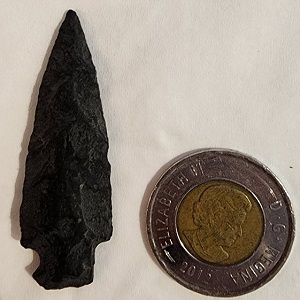
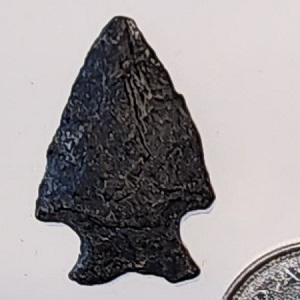
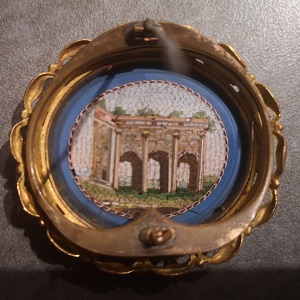
I mean, everything unto hoarding, but there seem to be a few things in particular. Anything that measures - scientific instruments, telescopes, microscopes, rulers, x-ray, optics, etc. This is a broad interest. Religious iconography, kitsch, juju, Roman Catholic, Buddhist, Etc, quack medicine, clothes - too many, and I've purged these a hundred times, neckties, - easily 1000 (I sorted them today. It took a while...). Cufflinks, Watches, men's accessories, like handkerchiefs, cigarette cases, Stationary, pens, art supplies (oh-man-oh-man-oh-man), rocks, rocks, rocks, sticks, antlers, books, books books, old: lamps, statues, paintings, anything that jogs the imagination or curiosity. Old instruments. I could go on. Collections? Watches. Cufflinks. Neck Ties. Candlesticks. Those are the four major ones. Purge these and I'll be halfway there. Well, no, because these 4 collections take up a very little space comparatively, but those are the ones of interest, the ones I've really gone overboard on, I wonder what - psychologically - that says? Never mind. By the time I figure that one out they'll be gone...
- Details
- Written by: Rod Boyle
- Category: Ideas & Questions
- Hits: 1286
And, reading, noticing that while Heaven, frequently, is referred to as being "one with the infinite", Hell, on the other hand, is quite the opposite. Generally I'm talking a more well thought out version of Hell than most Christians suggest when they talk about meeting Jesus on a Golf course.
Hell is concerned with reason and measurement. The Devil is in the details, as they say...
Wherever you go Hell always seems to be a slightly worse version of earth. There's money - for the ferryman, Hell Money for the ancestors, there's The Weighing of Souls and the bookkeepers and accountants and the trivial reasoning of minute details that always seem to accompany science and measurement. The idea of limiting - namely God, Spirit, denying that portion of your infinite growth, that you've somehow measured yourself, and in measuring restricted and bound yourself to earthly things, therefore your hell will be an extended, rational measuring of your soul...
There is also the OCD aspects of Vampires and Witches; Scatter the millet or mustard seeds and they will have to stop and count them, giving you time to escape, or the cock to crow - this is curious as well - measurement, counting...
Heaven, then, seems to argue for an emotional and intuitive understanding of the world, whereas Hell a rational and measured one...